How to Create a Magical Reading Nook for Children

There is something very special about creating a room for a child.
I have four children, and some of my happiest memories are of making their rooms feel like little worlds of their own — painting walls, creating murals, choosing colours, filling shelves with beautiful books, and adding the small things that made each space feel a little magical. Books were always part of that. I loved finding wonderful stories for my children, and I loved reading to them, and although we never had what I would then have called a formal "reading nook," there was a very large beanbag where we would sit together, a bookshelf filled with books, and our wooden birds turning overhead. Looking back, I realise we had created one anyway.
A reading nook doesn't have to be elaborate, and it doesn't even have to be a separate part of the house. It can simply be a little corner of a bedroom, a space beneath a window, or somewhere at the end of a passage. What matters is that it feels inviting — somewhere a child wants to curl up, open a book, and disappear for a while.
Why a reading nook matters
Children today grow up surrounded by technology from such an early age. Screens are entertaining, immediate and constantly available, and there is nothing necessarily wrong with that, but I do think there is something increasingly precious about giving a child a quiet place where nothing is asking for their attention — somewhere they can slow down, imagine, and simply be with a book.
Not every child falls in love with reading immediately. For some it comes naturally; for others, somebody has to open that door for them, and reading to a child is one of the loveliest ways to do it. Before they can read for themselves, they discover that inside a book there might be a forest, an adventure, a strange creature, another country, another time, or an entirely different world. Once they understand what's possible inside a story, something has begun. Youare igniting that curiosity.
Create a space that feels like theirs
A children's reading nook doesn't need to be large, and in fact smaller can sometimes be better. Children often love enclosed, cosy spaces — somewhere that feels a little separate from the rest of the room, even if it's only separated by a rug, a canopy or a pile of cushions. Look around the room and find the place that naturally feels a little tucked away. It might be beside a bookshelf, underneath a window, in an unused corner, beneath a canopy, beside the bed, or even inside a large cupboard or alcove that can safely be transformed. The idea isn't perfection. The idea is to create a little world within a world.
Make it comfortable enough to stay awhile
Comfort matters. A beanbag worked beautifully for us because there was enough room for me to sit with my children and read together, but a floor cushion, a small mattress, an armchair, or a rug with plenty of cushions would work just as well. The best reading nook is one that actually gets used — somewhere a child can flop down rather than somewhere they have to sit carefully because everything looks too precious to touch. Add a blanket. Let the cushions get moved around. Let the space become theirs.
Keep books where children can see them
A shelf of beautiful books can completely change the feeling of a child's room. Books shouldn't feel like something that only comes out at bedtime, or something stored away where children forget about them — keep some within easy reach. For younger children, front-facing bookshelves can be particularly inviting, since they can see the covers rather than just rows of spines. And don't worry too much about what children "should" be reading. Follow their curiosity. One child might love animals, another might become fascinated by space, dinosaurs, fairies, machines, insects or enormous adventure stories, and there is usually a book somewhere that will capture them. Sometimes we simply have to help them find it.
Make the space a little magical
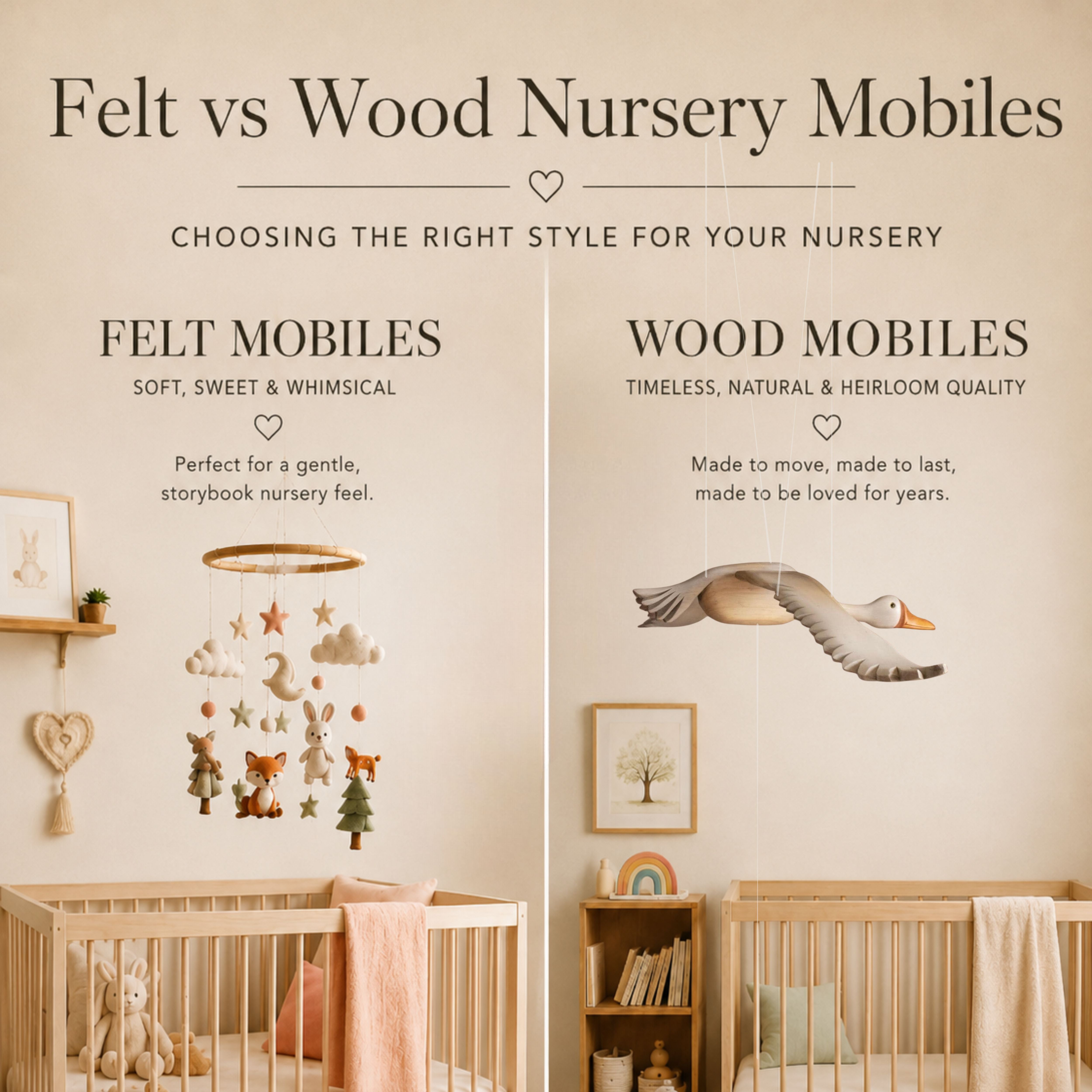
This is where creating children's rooms becomes such fun. A reading nook can be simple while still feeling magical — soft lighting makes an enormous difference, and so can a painted wall, a mural, a canopy, stars, artwork, or something beautiful hanging overhead. I have always loved the idea of giving children something to look up at, and our WoodWings birds grew naturally out of that same love of movement and imagination. A bird suspended above a reading corner, turning gently through the air, somehow feels at home in a space built around stories, without needing to dominate the room. It's simply another little invitation to imagine — perhaps the bird belongs to the forest in the story they're reading, perhaps it's flying somewhere far away. Children are very good at filling in the rest.
Read there together
Perhaps the most important part of creating a reading nook has nothing to do with decorating it at all. Use it. Sit there together. Read aloud, and let your child choose the same favourite story for the hundredth time. Talk about the pictures, wonder what happens next, make up voices if you feel like it. Those experiences become part of what a child associates with books — reading becomes warmth, attention, imagination and time together, rather than simply another skill they're expected to learn. And then, one day, they begin reading without you.
Let imagination do some of the work
One of the extraordinary things about reading is that the story is only partly on the page. The rest happens inside us. When we read about a house, we create that house in our minds; when we meet a character, we imagine their face; we decide what the forest looks like, how the room feels, and what the world beyond the page might contain. That's why films of books can sometimes feel disappointing — someone else has created the world for us, when the world we imagined was our own. That ability to create pictures and possibilities inside the mind is something worth nurturing in children, perhaps more than ever.
It doesn't have to be perfect
You don't need a beautifully styled room or a huge budget to create a wonderful reading nook. Start with a corner. Add somewhere comfortable to sit, put a few wonderful books nearby, add a soft light, and then perhaps introduce one or two things that make the space feel a little magical. Most importantly, spend time there. Because in a world that can sometimes feel noisy, busy and overwhelming, there is something very special about giving a child a place to escape — and sometimes that place can be no bigger than a comfortable corner, a shelf of books, and a little imagination.