Felt vs Wood Nursery Mobiles: Choosing the Right Style for Your Nursery

Felt mobiles are a popular choice for a nursery.
I have bought felt pieces myself over the years — for children's rooms, for Christmas decorations, and for my own home. Felt is soft, playful and handmade, and it's easy to see why it remains popular, whether it's a gender neutral nursery built around clouds and rainbows or a woodland nursery filled with felt foxes and hedgehogs.
My own experience has also made me think about the different qualities of felt and wood, particularly when choosing a piece you hope will feel at home in a room for many years — whether that room is a nursery today or, later on, a bedroom or reading nook it grows into. That's really what this comparison is about: not one material being better than the other, but two different ways of bringing colour, texture and character into a child's space.
Felt mobiles and the nursery stage
Many felt mobiles are designed with a particular stage of life in mind. Clouds, stars, rainbows, woodland animals and pastel shapes suit a nursery well, and felt is a natural fit for baby nursery ideas built around soft colour and texture.
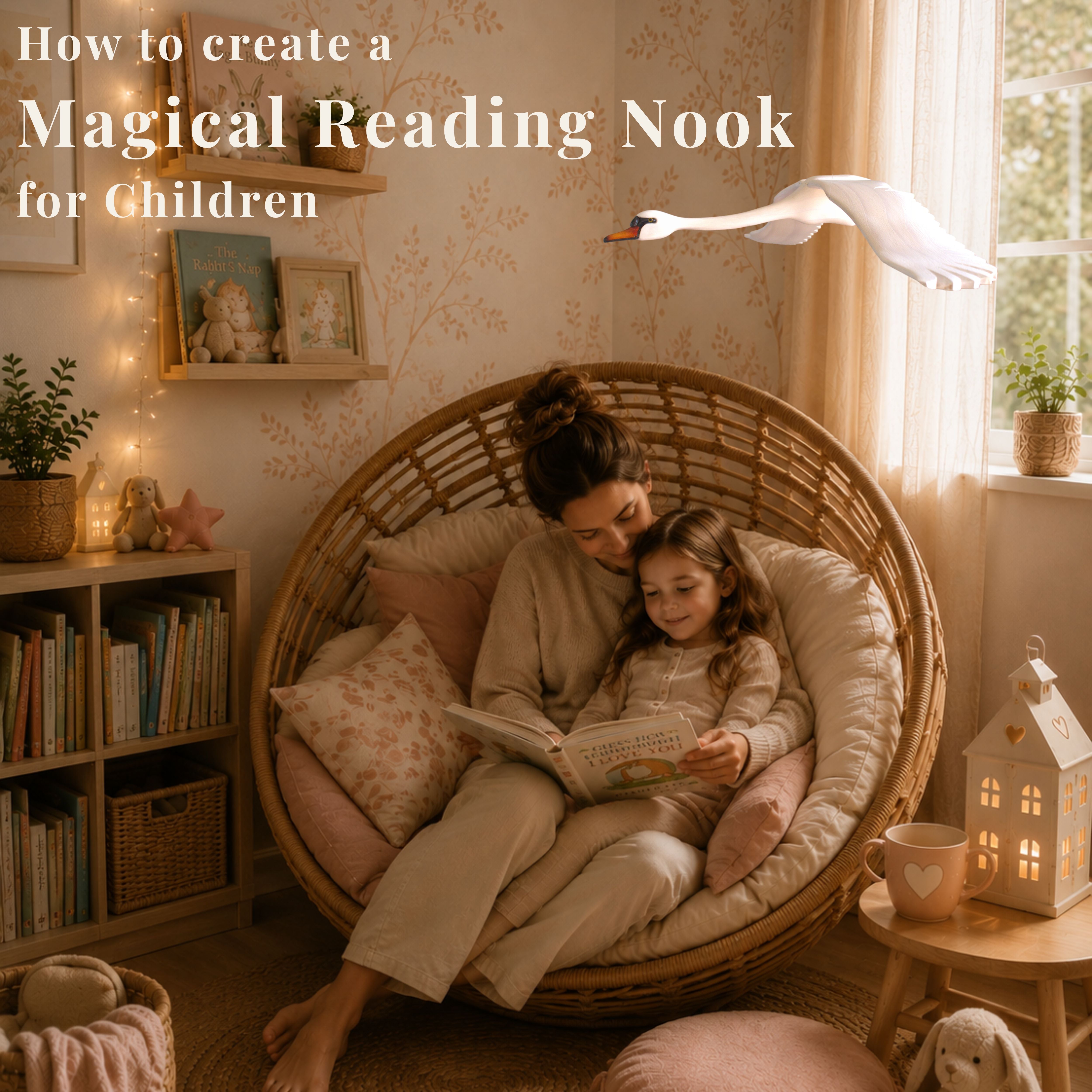
As children grow, their rooms tend to grow with them, moving from a baby nursery into a bedroom, a play space, or eventually a reading nook of their own. Some parents like refreshing the mobile at each of these stages, choosing new nursery wall decor to match the new phase of the room. Others prefer something that can move along with the space as it changes, without needing to be replaced.
This was something we thought about a great deal when we started making our WoodWings birds — not because felt does anything wrong, but because we wanted to make something that could sit comfortably at either end of that journey, from the first nursery through to whatever the room becomes afterwards.
A mobile that can grow with a child
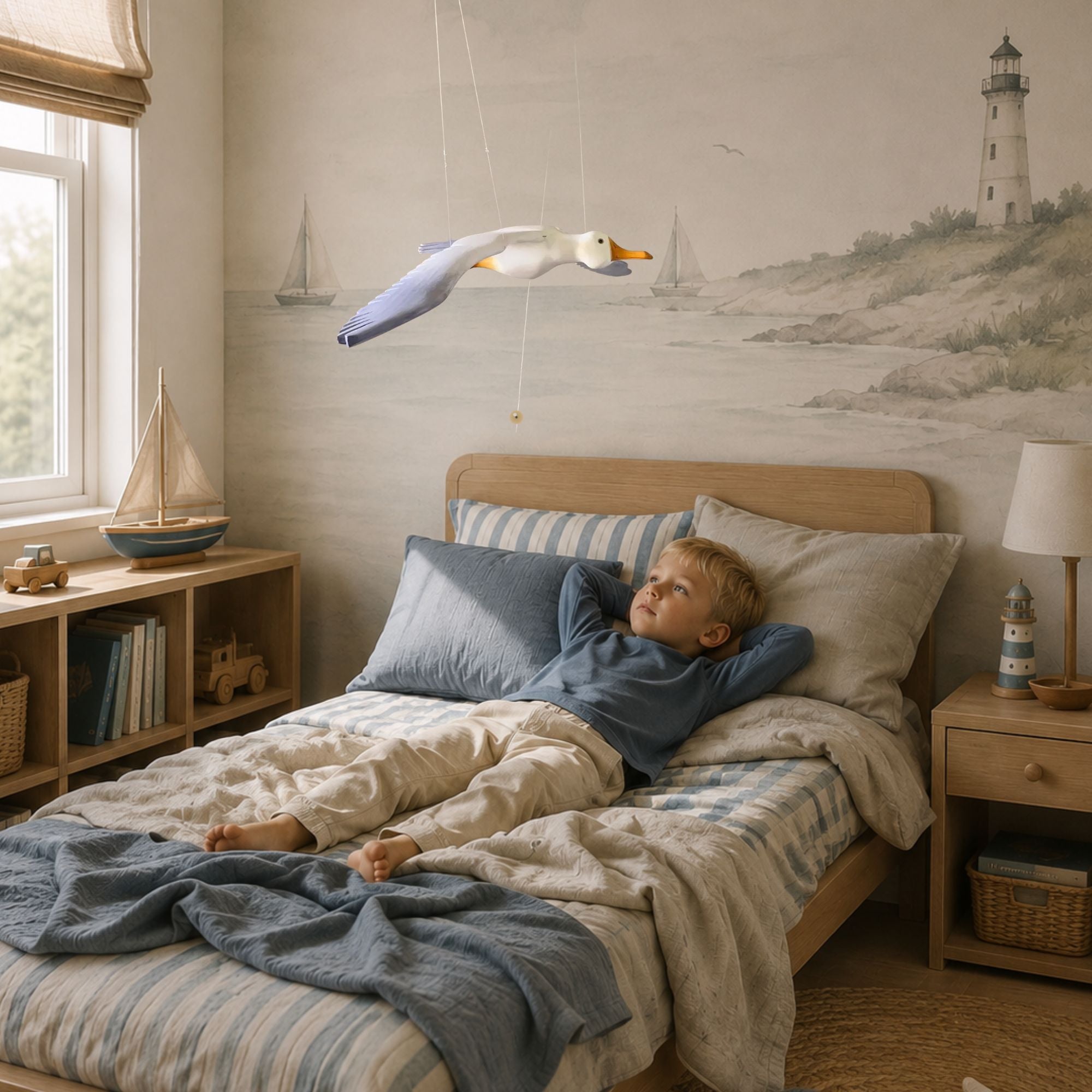
One of the things I love most about a wooden bird mobile is that it doesn't really belong to a particular age. A swan, owl, goose, seagull or flamingo can suit a baby's nursery well, but it can work just as well several years later above a reading nook or in an older child's bedroom, and later still it might move into a hallway, a living room, a holiday home, or even the child's own home when they're grown.
That's simply a different way of thinking about a nursery mobile. Rather than being chosen for one particular stage, a wooden piece can become something that quietly carries on past it — while a felt piece, chosen well, can do exactly what it was made to do for as long as that nursery stage lasts.

A note on longevity and material
This is where my own experience with felt and wood has felt most different, without either one being the "better" choice. Felt is a soft material and behaves the way soft materials do — it settles and relaxes with time and handling. Wood is a different kind of material: a well-made wooden piece tends to hold its solidity, and with basic care can generally be kept in much the same condition for a long time.
Neither of these is a flaw. They're simply two materials with two different characters, and which one matters more to you probably depends on how you're picturing the room — as it is now, or as it might become.
What happens to colour over time
Colour matters in a child's room. Felt mobiles often use soft, gentle shades that suit a natural nursery decor style, and the colour in felt sits within the fabric itself rather than on a painted surface.
With our WoodWings birds, the colour is hand-painted onto a solid carved form, which is simply a different approach to colour than dyed fabric. As with any material, how well it holds up depends partly on care and the conditions it's kept in, but it's a difference in material and process rather than one option being more durable than the other by default.
Two different kinds of presence
There is also simply something different about the two materials. Wood has a visible form — you can see that it's been carved and shaped by hand, and it has a certain weight, texture and sculptural quality to it. Felt has a lighter presence, suited to the quieter, cosier feel many people want in a nursery.
No two of our wooden pieces are exactly identical, since they aren't coming out of a machine as perfectly uniform objects, and that slight individuality is part of what makes a handmade wooden piece feel distinctive. Felt has its own handmade character too, with its own texture and imperfections that differ from machine-made plastic decor.
And then there is the movement
Most nursery mobiles move gently when air passes through the room, and felt shapes tend to sway softly, catching the light in an unhurried way.
WoodWings birds work a little differently, because they aren't only decorative — they're interactive. Each bird is a kinetic mobile, an interactive toy: pull the string, and the wings move slowly up and down, creating the impression of a bird in flight, before settling back into stillness again. That small action gives a child a simple cause-and-effect experience rather than something to only look at. Children often love pulling the string themselves and watching the bird "fly," and that bit of active play is part of why the mobile can go on holding a child's interest well beyond the baby stage, long after a purely decorative piece might have faded into the background of the room.
Which should you choose?
There isn't really a right or wrong answer here — only what suits your room, your taste and what you want the piece to become.
If you're drawn to a whimsical, distinctly nursery feel — clouds, woodland characters, gentle colour — felt is a genuinely good choice, and there are lovely felt mobiles designed exactly for that.
If you're drawn to something more sculptural, with weight and natural texture, something a child can actively engage with rather than simply look at, or the idea of a piece that might move with your child from the nursery into a reading nook and beyond, wood is worth considering.
Either way, the most important thing is choosing something that feels right for the room you're creating — a gentle, neutral nursery built around colour and texture, or a room built around wood, form and a little movement overhead. For us, that's the real beauty of both materials: they simply offer two different ways of bringing character and a little wonder into a child's room.