Warm Minimalist Interiors: How to Add Character Without Clutter

There is a particular kind of room that looks beautiful in a photograph but can feel strangely difficult to live in.
Everything is perfectly neutral. Every surface is clear. The palette is restrained, the furniture carefully chosen — and yet somehow, there is nothing in the room that tells you who lives there.
That is where warm minimalism gets interesting.
A warm minimalist interior isn't about having as little as possible. It is about choosing fewer things, but choosing things with presence, texture and meaning. Natural materials, pieces made by hand, books you actually read, objects collected over time and the occasional unexpected thing can turn a quiet room into one with real personality.
The aim isn't emptiness.
It is breathing space.
Start With a Warm, Natural Foundation
White walls don't have to feel stark.
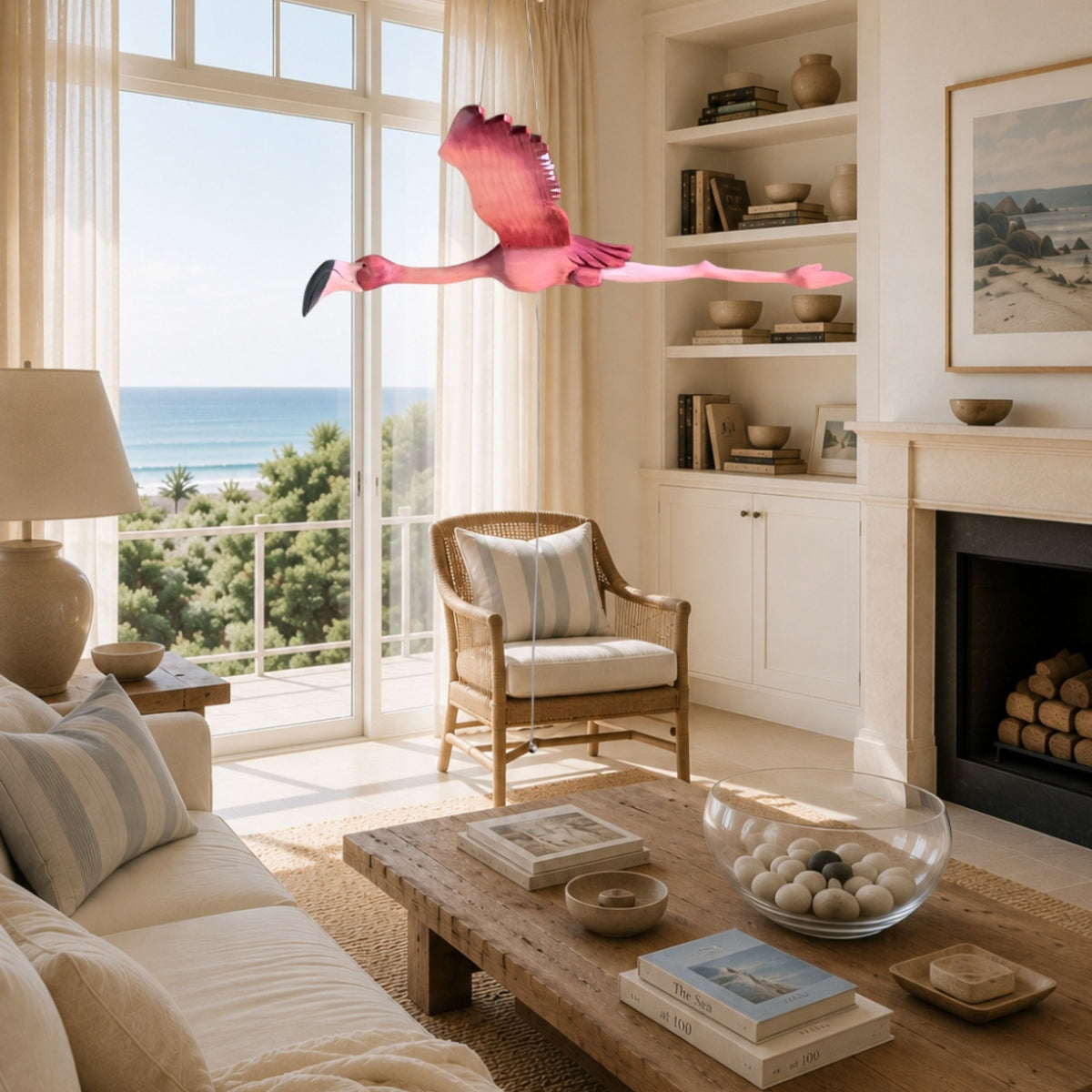
Put that same white wall beside pale timber, softly rumpled linen curtains and a worn wooden table, and it changes completely. Add the texture of wool, a handmade ceramic vessel or a woven chair and the white becomes a backdrop for all those materials rather than the dominant feature of the room.
It is one of the simplest ways to understand warm minimalism: the warmth doesn't necessarily have to come from colour. It can come from what you put alongside it.
Soft whites, stone, sand, clay and warm greys all work beautifully as a foundation because they give other materials room to be noticed. And natural wood is particularly good at taking the sterility out of a pale room. Its grain, knots and variations introduce something that no perfectly uniform manufactured surface can quite reproduce.
The result can still feel light and minimal, but it no longer feels cold.
Let Texture Do Some of the Work
When there are fewer things in a room, the materials themselves become more important.
Linen has a different weight and movement from a perfectly smooth fabric. Raw timber feels different from a lacquered surface. Wool, stone, woven fibres and handmade ceramics all introduce subtle variation.
You don't necessarily need another colour or another decorative object. Sometimes what a neutral room needs is simply another texture.
This is particularly useful in a warm minimalist interior because texture creates interest without creating visual clutter. A heavy linen curtain, a roughly finished wooden table and a beautiful ceramic bowl can give you all the variation you need.
And because natural and handmade materials are rarely completely uniform, they also bring a little imperfection with them.
That's a good thing.
Give the Room Somewhere to Breathe
There is a strong temptation when decorating to look at every empty wall, corner or surface and wonder what should go there.
Sometimes the answer is nothing.
Negative space is part of the design.
Leaving a section of wall bare gives the artwork beside it more presence. A table with one beautiful object on it allows you to actually notice that object. An empty corner can make the furniture around it feel less crowded.
This doesn't mean creating rooms that feel unfinished. It means resisting the urge to fill space simply because it exists.
A little breathing room gives the eye somewhere to rest — and makes the things you have chosen matter more.
Choose Character Over Perfection
A room can be beautifully considered without everything in it matching.
In fact, some of the things that give a home the most character are precisely the things that don't.
An old wooden stool beside a contemporary chair. A slightly uneven handmade bowl. A painting you bought years ago because you loved it. A table that has acquired a few marks. Something inherited. Something brought home from a journey.
A home needs evidence of life.
When everything is new, immaculate and perfectly coordinated, a room can lose some of the individuality that makes it interesting.
Warm minimalism gives these personal objects space. Because there is less competing for attention, a piece with history or an unusual shape becomes more noticeable.
You don't need many of them.
You just need the right ones.

Let One Unexpected Piece Hold the Room
In a restrained interior, one unexpected object can become a quiet centre of gravity.
It doesn't have to be loud or enormous. It simply needs enough presence to give the eye somewhere to land.
It might be an unusual light fitting, an oversized ceramic vessel, a piece of sculpture or something suspended in the room rather than placed against a wall.
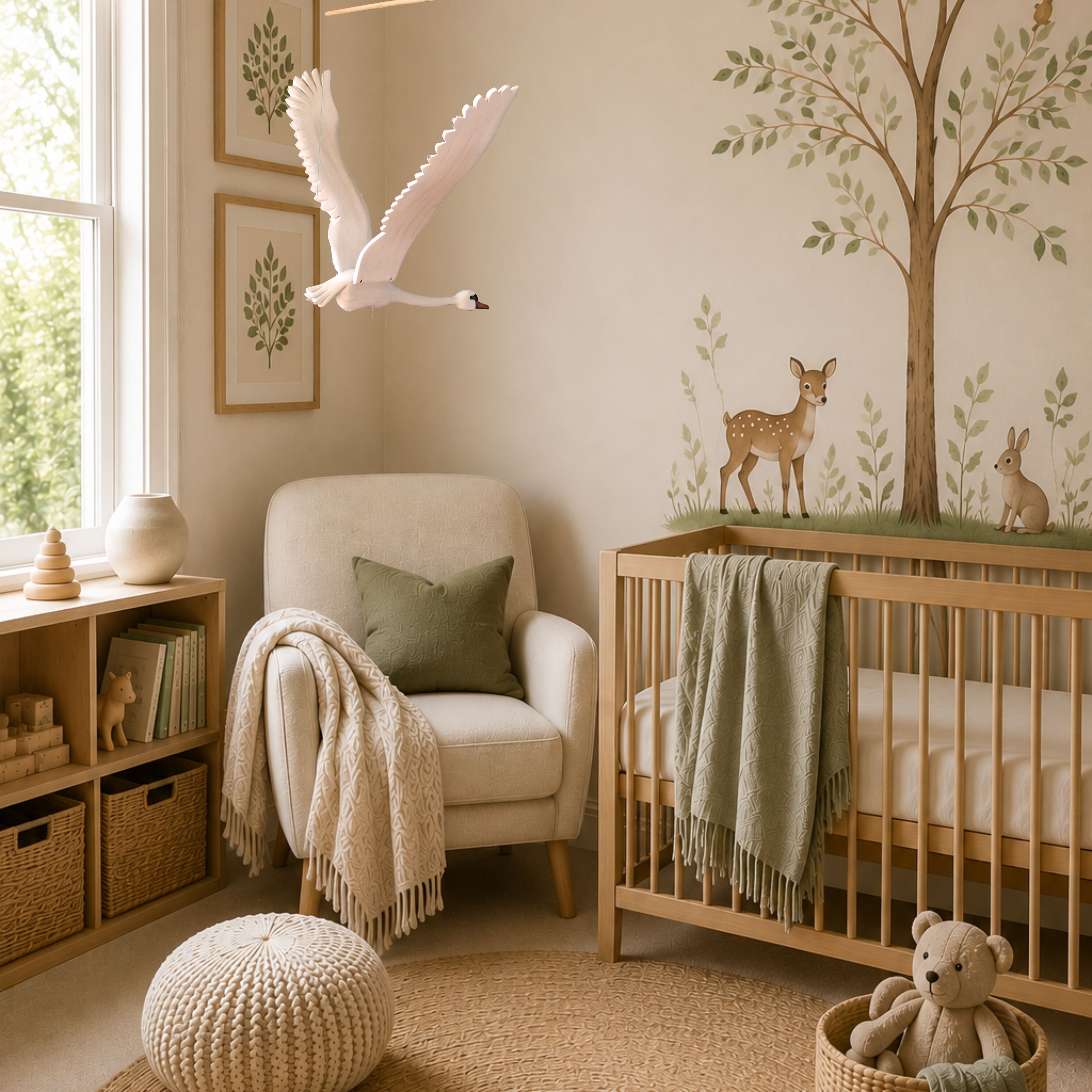
We've seen this with our own hand-carved wooden birds in adult interiors. Suspended above a reading chair, in a study or over a dining table, they occupy the space differently from an object sitting on a shelf.
The light catches the carved wings differently as the day changes, and the bird moves gently with the air in the room. Against the straight lines of tables, shelves, doors and picture frames, its organic shape introduces something softer and less predictable.
And because it is suspended, it draws your attention to a part of the room we often forget about — the space between the furniture and the ceiling.
The principle matters more than the particular object. A quiet interior can accommodate something surprising remarkably well. In fact, sometimes the restraint around it is precisely what allows an unusual piece to work.
Establish a Relationship With the Outside World
Bringing nature into a room doesn't have to mean filling it with plants or choosing an obvious botanical theme.
The connection can be much quieter.
A branch in a ceramic vase. The grain of an old wooden table. Stone. Linen moving beside an open window. A hand-carved object made from wood.
These small references to natural materials and forms can establish a relationship with the outside world without making the room feel themed.
They also introduce irregularity. No two pieces of timber are exactly alike. Handmade ceramics have tiny variations. Linen creases. Stone has marks and veins that weren't designed by anybody.
Those imperfections sit particularly beautifully within a simple interior.
Mix Old and New
Warm minimalist interiors don't need to look as though everything was bought at the same time.
A contemporary sofa can sit beside an old table. A modern lamp can work above a worn rug. A simple room can hold an antique painting or something inherited from a grandparent.
The pieces don't have to come from the same period or even belong to exactly the same style.
What matters is that they sit comfortably together.
Often, natural materials provide that connection. Wood, linen, leather, stone and ceramics can cross periods and styles surprisingly easily.
And a room that has developed gradually tends to tell a much more interesting story than one in which everything matches perfectly.
Make Sure You Can Actually Live in It
Perhaps one of the easiest ways to judge a warm minimalist interior is to imagine what happens after the photograph has been taken.
Can you put your coffee on the table?
Can you pull a book from the shelf without ruining the arrangement?
Can someone curl up under the blanket?
Does it matter if the cushion moves?
A beautiful home should be able to absorb ordinary life.
A book left open, flowers beginning to droop in a vase, a chair pulled closer to the window — these aren't things that spoil a room.
They're evidence that somebody lives there.
And perhaps that's ultimately what makes warm minimalism feel so different from a room that is simply sparse. There is restraint, but there is also softness. There is order, but not perfection.
A Calm Home Can Still Have Personality
Creating a warm minimalist interior isn't about removing the things that make your home yours.
It is about giving those things enough room to be noticed.
Keep the breathing space. Keep the calm. Keep the natural materials and the things that have earned their place.
But leave room for something handmade, inherited, funny, sculptural or completely unexpected.
Because the objects that give a home character are rarely the ones chosen simply because they match.